Why to choose UK?

Mr. Mentor
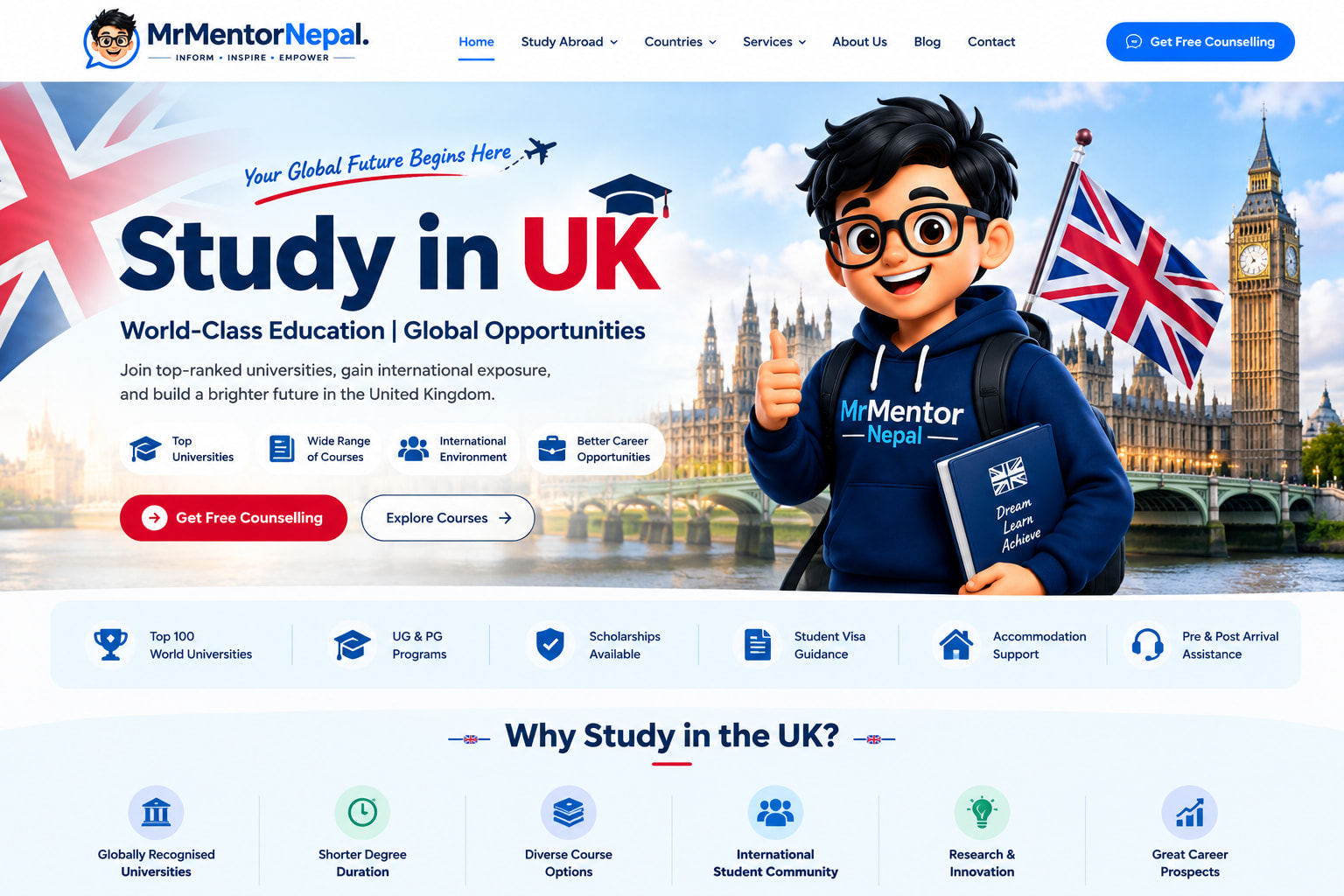
About Studying in the UK? Here’s Your Complete Guide!
If you’re dreaming of studying abroad, the United Kingdom is likely high on your list — and for good reason. Known for its world-class universities, diverse culture, and rich history, the UK offers a unique blend of academic excellence and life-changing experiences. Whether you’re from Nepal or anywhere else in the world, navigating the path to studying in the UK can feel overwhelming. But don’t worry — this guide will walk you through everything you need to know with clarity, insight, and a dash of friendly advice.
Why Choose the UK?
The UK has been a hub for higher education for centuries, with universities like Oxford, Cambridge, and Imperial College London leading the pack globally. Here’s what makes the UK stand out:
- Globally Recognised Universities: From business and engineering to arts and social sciences, UK universities carry international prestige.
- Shorter Degree Durations: Many bachelor’s degrees wrap up in three years, and master’s programs often just take one year — great for fast-tracking your career.
- Wide Course Selection: Whether your passion lies in AI, finance, healthcare, or media, the UK offers thousands of programs to match your interests.
- International Community: Studying alongside peers from around the world means you’ll build lasting global networks and broaden your horizons.
- Research & Innovation: Keen on research? UK universities are powerhouses of innovation across disciplines.
Which Study Level Suits You?
The UK welcomes international students at all academic levels:
- Undergraduate: Usually three years. Open to those who’ve completed Grade 12 or equivalent.
- Master’s: Popular and typically one year long. Perfect for deepening your expertise after a bachelor’s.
- PhD: Research-focused, lasting about 3–4 years. Ideal if you want to dive deep into academic study.
Popular Courses That Open Doors
Choosing the right course is a big deal, and the UK’s diverse offerings make it exciting. Here are some favorites:
- Business & Management: MBA, finance, marketing, human resources — the list goes on.
- Computing & IT: Computer science, AI, cyber security, data science.
- Engineering: Civil, mechanical, electrical, biomedical, and more.
- Health & Social Care: Nursing, public health, social work — just be sure to check professional registration requirements.
How to Apply: A Step-by-Step Journey
Ready to apply? Here’s a streamlined roadmap:
- Choose Your Course: Pin down your academic and career goals.
- Research Universities: Look at course content, fees, location, scholarships, and graduate success.
- Check Eligibility: Confirm your academic background and English proficiency meet requirements.
- Prepare Documents: Certificates, transcripts, passport, CV, personal statement, references, and work experience if needed.
- Submit Your Application: Use UCAS for undergraduates or apply directly for postgraduate programs.
- Receive an Offer: Could be conditional (pending requirements) or unconditional.
- Meet Conditions: Fulfill any outstanding criteria.
- Get Your CAS: Confirmation of Acceptance for Studies is essential for your visa.
- Apply for Your Student Visa: With CAS and all documents ready, submit your visa application.
Budgeting Your UK Adventure
The cost of studying in the UK varies widely depending on your university, course, and city. Tuition fees can be steep, but don’t forget living expenses like accommodation, food, transport, and books. London and other major cities tend to be pricier than smaller towns, so calculate your total budget carefully.
Scholarships: Helping Your Wallet Breathe
Good news! Many UK universities offer scholarships based on academic merit, country of origin, leadership, research potential, and more. Programs like Chevening and Commonwealth Scholarships are popular, but always check the latest details directly from your chosen university.
Visa and Working While Studying
Most international students need a UK Student visa, which requires a CAS, proof of finances, and English proficiency evidence. Some students can work part-time during their studies, but always verify the specific visa rules to stay compliant. Remember, your primary focus should be your education.
Living in the UK: What to Expect
From bustling London to vibrant Manchester, or historic Edinburgh, the UK offers a variety of cities to call home. Accommodations range from university halls to private rentals. When choosing where to live, consider proximity to campus, rent prices, transport options, and safety.
Pros and Cons: A Balanced View
Studying abroad is thrilling but comes with challenges. Here’s a quick look:
- Pros: Prestigious education, diverse courses, international exposure, shorter degrees, networking, and research opportunities.
- Cons: High living costs in some places, competitive admissions, adjusting to new systems and cultures, and navigating visa rules.
Planning for Life After Graduation
Your UK degree can open many doors, but building skills beyond academics is key. Develop your communication, problem-solving, and networking skills, seek internships, and polish your CV. Stay updated on UK immigration policies if you plan to work there after graduating.
Final Thoughts
Studying in the UK can be a life-changing adventure packed with learning, growth, and new friendships. Take your time to research, plan, and choose wisely based on your goals, budget, and eligibility. If you’re from Nepal and feel overwhelmed by choices, consider professional counselling to guide your journey.
Ready to take the leap? Your future in the UK awaits — thoughtful planning is your first step toward making it real. Stay curious, stay confident, and embrace the exciting path ahead!